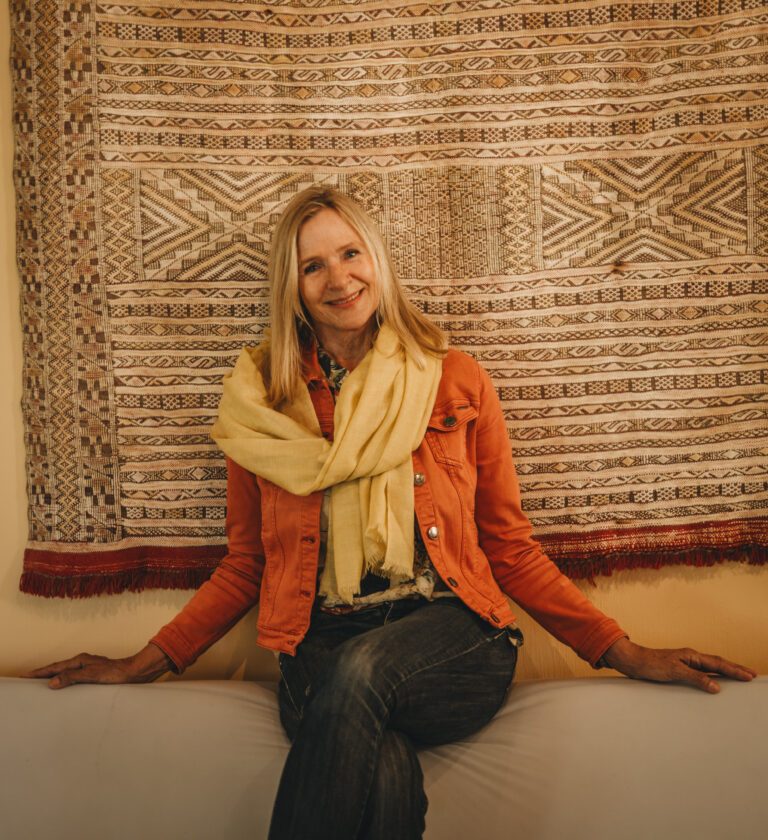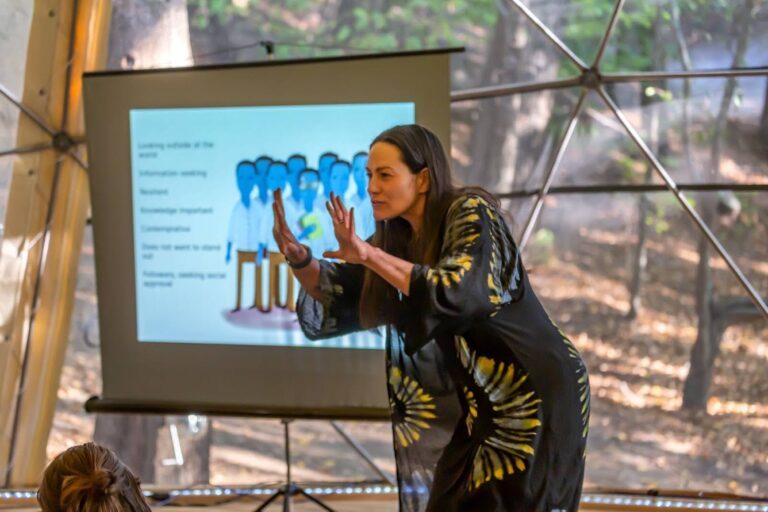

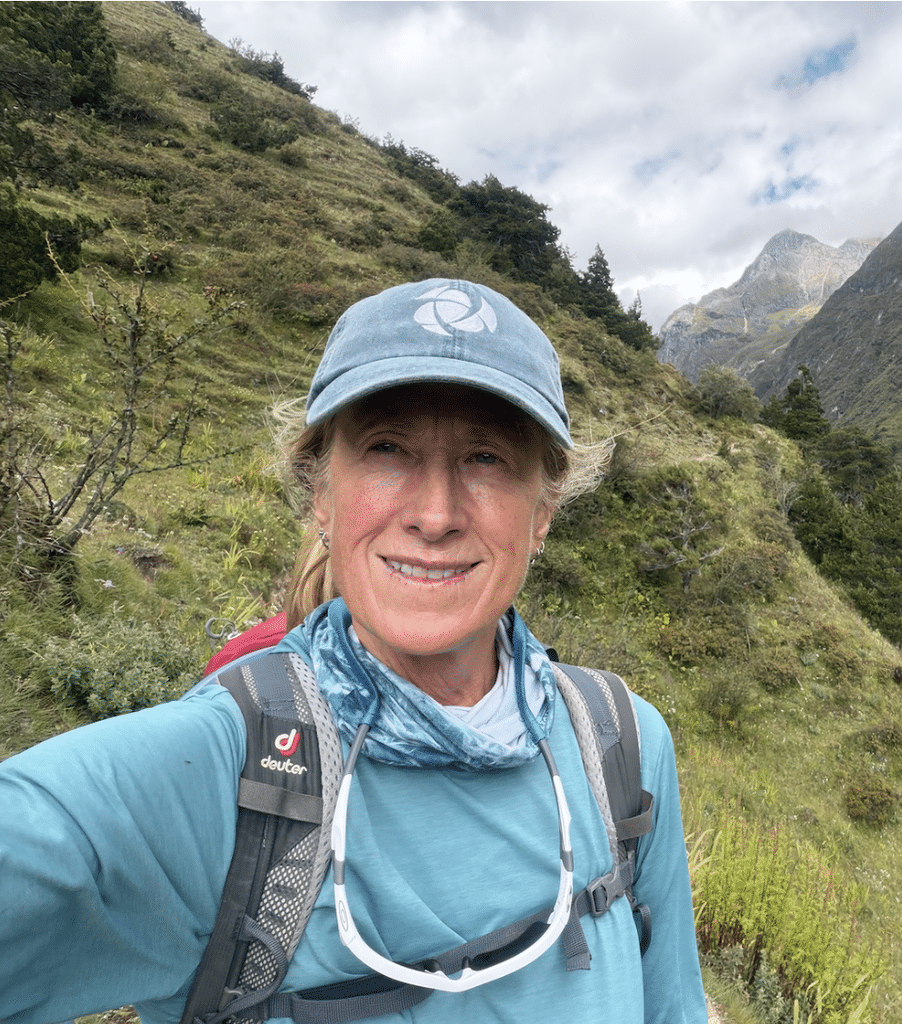
Hannah Gosnell is a Professor of Geography in the College of Earth, Ocean and Atmospheric Sciences at Oregon State University. Her research explores the human dimensions of climate change and biodiversity conservation, regenerative agriculture, human animal relations, and transformations to sustainability. For more than a decade she has studied the transition from conventional to regenerative agriculture, looking at both its inner dimensions (mental models, mindsets, culture, values, beliefs, emotions) and at relevant institutions and governance structures, from carbon markets to microscope clubs and holistic management training.
She was a Coordinating Lead Author on the IPBES Transformative Change Assessment, which identified the underlying causes of biodiversity loss and strategies for addressing them. She worked mostly on Strategy 5, which calls for shifting societal views and values to recognize and prioritize the fundamental interconnections between humans and nature, and moving from relations of domination to relations of care. As a Nova Institute for Health Scholar, she’s currently doing a deeper dive into Strategy 5, contemplating its relevance to transforming dysfunctional, degenerative food systems.
Hannah’s recent work
For her Nova Scholar project, Hannah is asking what “right relations” look like in conscious food systems, and animal agriculture in particular. Recent work looked at human animal relations (HAR) in regenerative ranching in the US West through an integral lens, identifying ideological, cultural, and structural constraints shaping what is feasible for HAR on even the most progressive ranches. Looking for alternate models, she traveled to Bhutan for the Global Conscious Food Systems Summit this September and visited yak herding communities along the Tibetan border to explore how Buddhist belief systems shape HAR in a pastoral context. A volunteering stint this summer at Happy Farm, a regenerative farm at the Plum Village monastery in southwest France, provided additional insights into the ways in which Buddhism shapes conscious food production and consumption, a thread she is continuing this fall through Plum Village’s online course, Zen and the Art of Saving the Planet.

Inspiring this work has been a growing sense that conventional approaches to social science research will not provide the kinds of insights and strategies needed to address the complexity of our current polycrisis. With this perspective she follows in the footsteps of Transformations Community OG, Ioan Fazey, who has been exploring ecocentric ways of approaching scientific inquiry for over a decade. In conjunction with the 2025 TCX-York gathering, he offered a course on shamanism called ‘Transformation From Within’, which sought to “harness ancient wisdom to go inwards and unleash your potential as a catalyst of outer change.” This course inspired and emboldened Hannah on her current path. Since then she’s been involved in several different communities of practice where she is experimenting with other ways of co-creating knowledge. These include a Positive Deviants fellowship with the Wolf Willow Institute; the Right Relations Sangha, an international group of sustainability scientists engaging with plant intelligence; and the Resonant Research Council, convened through the Coherence Lab in Kauai.

She recently joined the Deep Dive for Transformation Researchers, an experiential inquiry grounded in Raja Yoga wisdom into how practicing silence with 30 fellow scientists might shape perception, insight, and the quality of their relationships. All of these experiences have deepened her appreciation of relational approaches to transformation and have opened up new networks and possibilities for future research.
Hannah’s Call to Action for the Transformations Community
With the goal of better understanding the inner dimensions of transformative change, Hannah invites the community to submit proposals to a special issue of Earth Stewardship that she is guest-editing called “Addressing the Underlying Causes of Biodiversity Loss and Nature’s Decline through Transformative Change in Societal Views and Values.” The volume will seek to expand on Strategy 5 of the IPBES Transformative Change Assessment, exploring the five actions it proposes: increasing nature connectedness, promoting new cultural narratives and imaginaries, shifting norms around production and consumption, transformative learning, and co-creating knowledge across knowledge systems. The editors are especially interested in work on transformation amid disruption and uncertainty. They welcome non-traditional formats, including art–science collaborations, dialogues, and experiential pieces, as well as co-authorship with non-academic partners. Please submit proposals of 300–500 words to Hannah at gosnellh@oregonstate.edu by November 30. Selected authors will be invited to a series of working sessions leading up to the forthcoming Transformations Community gathering in Bilbao in October 2027, where authors and papers in the special issue will be featured.
In the spirit of the TC Agora, she would also like to share a question that is still forming. Many conversations about conscious food systems and inner transformation call for compassion and interconnectedness. Yet they often remain mute when it comes to the animals at the center of those systems. What does that silence reveal about the relations of care we’re actually willing to practice? What is the role of the more-than-human in conscious food systems? She welcomes stories, dilemmas, and half-formed thoughts from anyone for whom these questions resonate.
Connect With Hannah at